HEI Precision, a CNC machine shop in Bellingham, Washington, has built its equipment strategy around one recurring question: how a new machine can fit into an automated cell. President Mark Holz says the company, now AS9100-certified and ITAR-registered, was developed with high-volume production in mind. Its target work spans estimated annual usage from 200 to 200,000 pieces and now serves markets including motorsports, aerospace, defense, electronics, optics and commercial applications.
According to the article, the shop commonly produces 40,000 to 50,000 parts per month with only 10 employees. It does so through three automation formats: bar-fed lathes, robot-loaded dual-pallet vertical machining centers and palletized multiaxis machines. Holz says this combination supports volume without adding headcount in direct proportion, while also creating more dedicated capacity and clearer planning for customer forecasts.
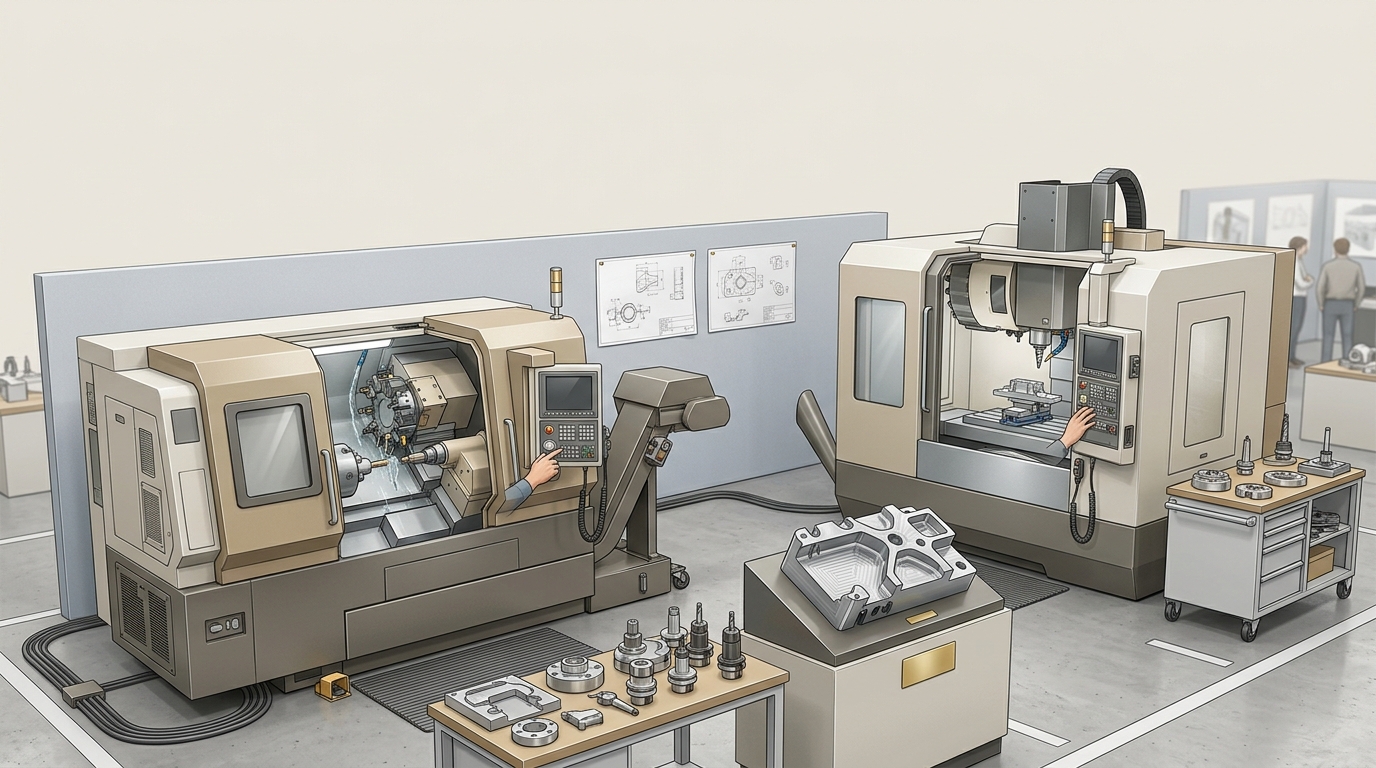
In turning, the company moved from basic three-axis bar-fed machines to more capable twin-spindle platforms with live tooling and then twin turrets. HEI Precision now has six DN Solutions multiaxis turning centers, all equipped with twin spindles, twin turrets and Y-axis milling capability. That setup allows complex round parts with milled features to be completed in one operation, while splitting work between main and sub-spindles shortens total cycle time. During the reported visit, two of these machines were producing shock absorber reservoir end caps, each capable of making 1,000 parts unattended per day.
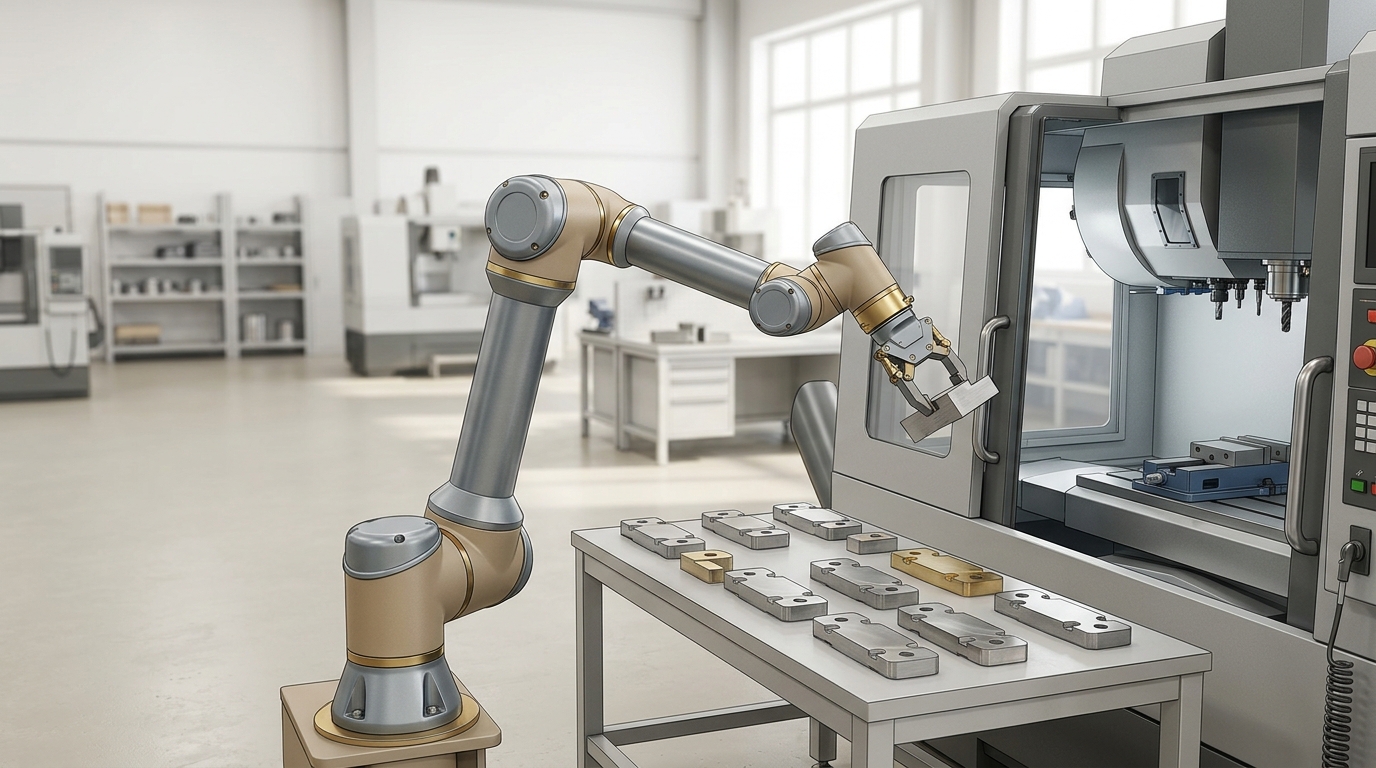
On the milling side, the shop first installed three dual-pallet Brother R650X2 three-axis VMCs for second-operation machining of shock absorber piston blanks. It later added two smaller Brother R-450X2 dual-pallet machines integrated with RoboJob Mill-Assist robot loaders and reconfigurable storage tables. In the newer arrangement, the pistons are milled directly from rectangular bar stock held in pneumatic vises, three pistons per bar. Once stock is manually loaded onto the RoboJob tables, the machines can run unattended for 12 hours. Holz says these two automated cells can outproduce the earlier three non-automated machines.
A higher-volume family of shock absorber bridge parts led the company to add a Matsuura H-Plus 300 in 2022, not as a standalone machine but as a four-axis horizontal machining center with 15-pallet automation and a 330-tool magazine. The integrated package was selected in part for compact floor-space use. For some precision jobs, the machine uses a Renishaw touch probe for in-process verification of critical features, and the machine stops if a feature is found out of specification. HEI Precision later expanded its palletized capacity with two Matsuura MAM 72-35V five-axis machining centers, each with 32-pallet automation and a 330-tool magazine, used largely for 3+2 work on prismatic parts such as manifolds.
Holz’s main takeaway is that the strongest payoff has come from pallet changing itself. While one pallet is in cut, others can be loaded, assigned programs and staged, which helps keep the spindle productive and leaves room for first-article work or program adjustments without major disruption to production. The company is also evaluating additional automation steps, including Swiss-type lathes, a gantry-load turning center for a current automotive job and a second CMM, along with options to make inspection more efficient.