The available material places the development in the high-temperature segment for rocket engines and hypersonic systems. In that context, it says these applications are moving beyond roughly 1,050 °C, a range where nickel superalloys begin to soften.
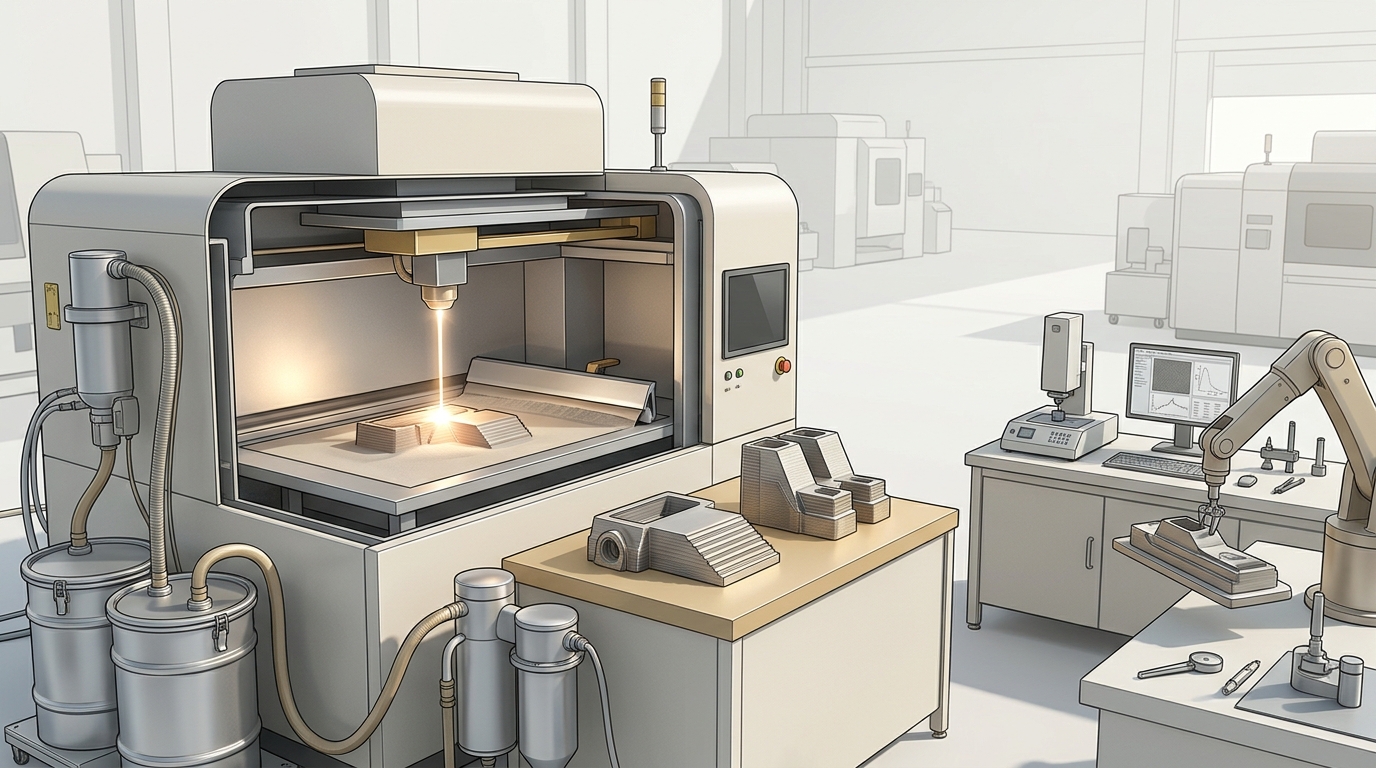
According to the source, niobium alloys are among the limited material options able to take over in that regime. TANIOBIS, identified as a powder producer, has shown that two such alloys, C-103 and FS-85, can be processed by laser powder bed fusion, referred to in the material as PBF-LB, at industrial scale.
The information provided is brief and does not include the processing window, machine details, geometry data, or resulting mechanical performance. The source title mentions a four-laser system and crack-free rocket nozzles, but those points are not developed in the supplied passage and therefore would require confirmation from the full article text.
From an industrial perspective, the key signal is the positioning of PBF-LB as a manufacturing route for refractory alloys that typically impose demanding constraints on processing, powder handling, and part-quality control. For metal AM users, industrial-scale processability is a different threshold from laboratory feasibility.
Even so, the picture remains preliminary based on the material supplied here. Without further detail on process parameters, repeatability, defect behavior, post-processing, and test results, the item mainly points to a technical direction: extending laser-based additive manufacturing into niobium alloys for thermally severe service.