Penn United Technologies has added metal additive manufacturing to a production platform built over decades across stamping, precision grinding, machining, carbide production and coating. Headquartered in Cabot, Pennsylvania, the company serves demanding sectors including nuclear, medical and aerospace. In that setting, additive is treated less as a standalone initiative and more as another manufacturing route to be weighed alongside the company’s existing processes.
The move into additive started with a customer in the nuclear sector. Penn United took delivery of its first metal 3D printer in 2018 under an operating agreement tied to equipment purchased by that customer for a structural component used in a fuel rod assembly. According to the case study, the company was already well positioned from a quality and regulatory standpoint because it had long produced nuclear parts through conventional methods. Existing wire EDM, CNC machining and grinding capacity also meant that the main learning curve centered on LPBF itself rather than on downstream processing.
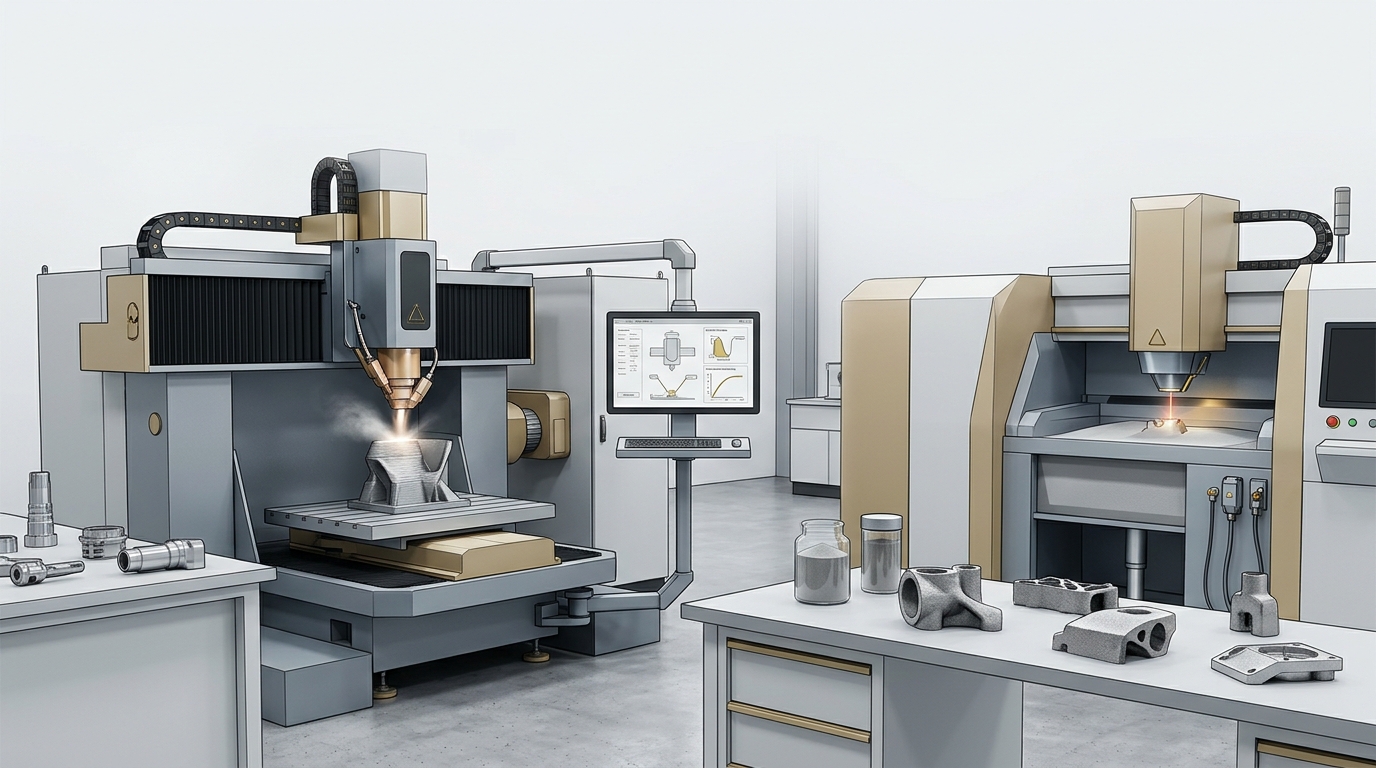
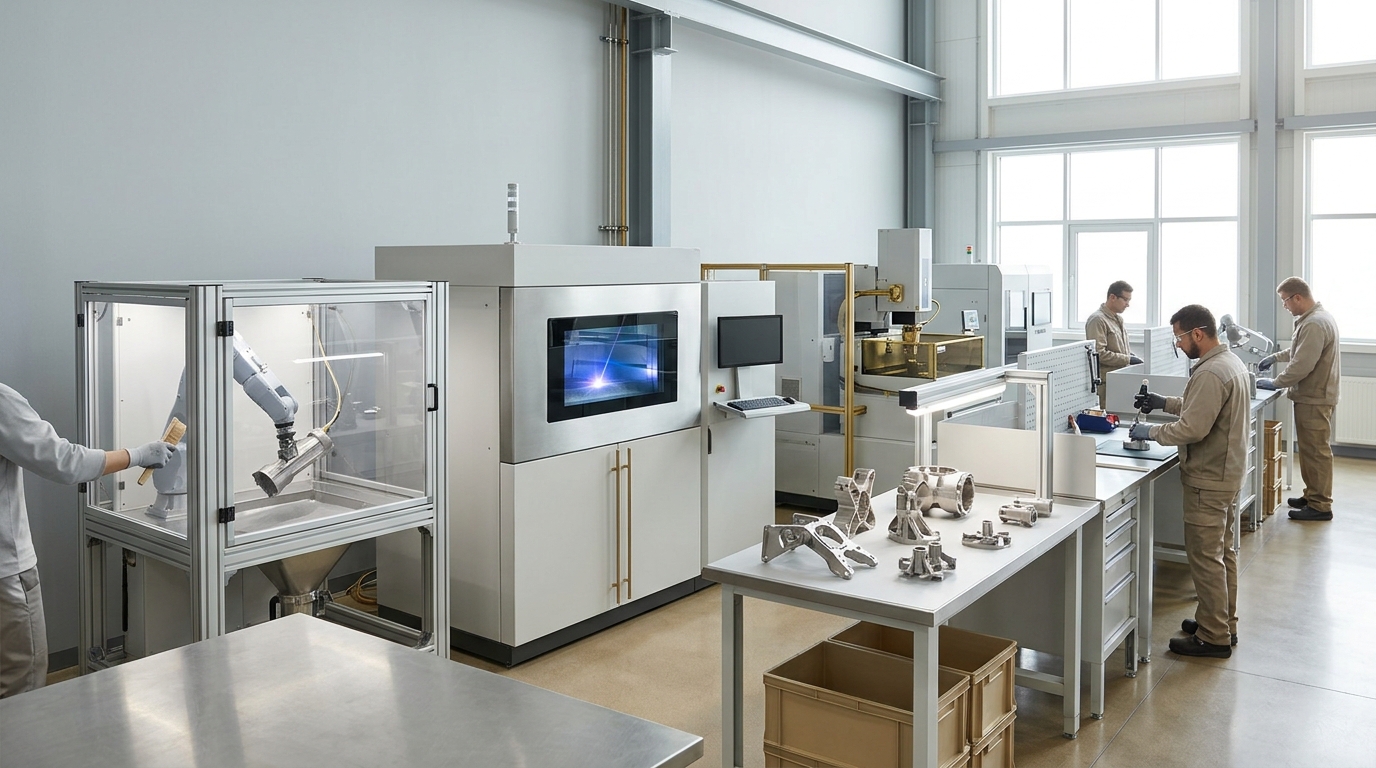
From that initial program, the operation has expanded to nine EOS metal 3D printers. The installed base includes M290 systems, an M4K from EOS sister company AMCM capable of builds up to 1,000 mm tall, and an M400-4 equipped with an automated Volkmann powder handling system and a Grenzeback dual-setup station to speed build changeovers. Materials cited include stainless steel, nickel alloys, aluminum, C18150 copper and proprietary alloys. Supporting equipment includes a Solukon SFM-AT 1000-S for automated depowdering of parts up to 1,000 mm tall and 800 kg.
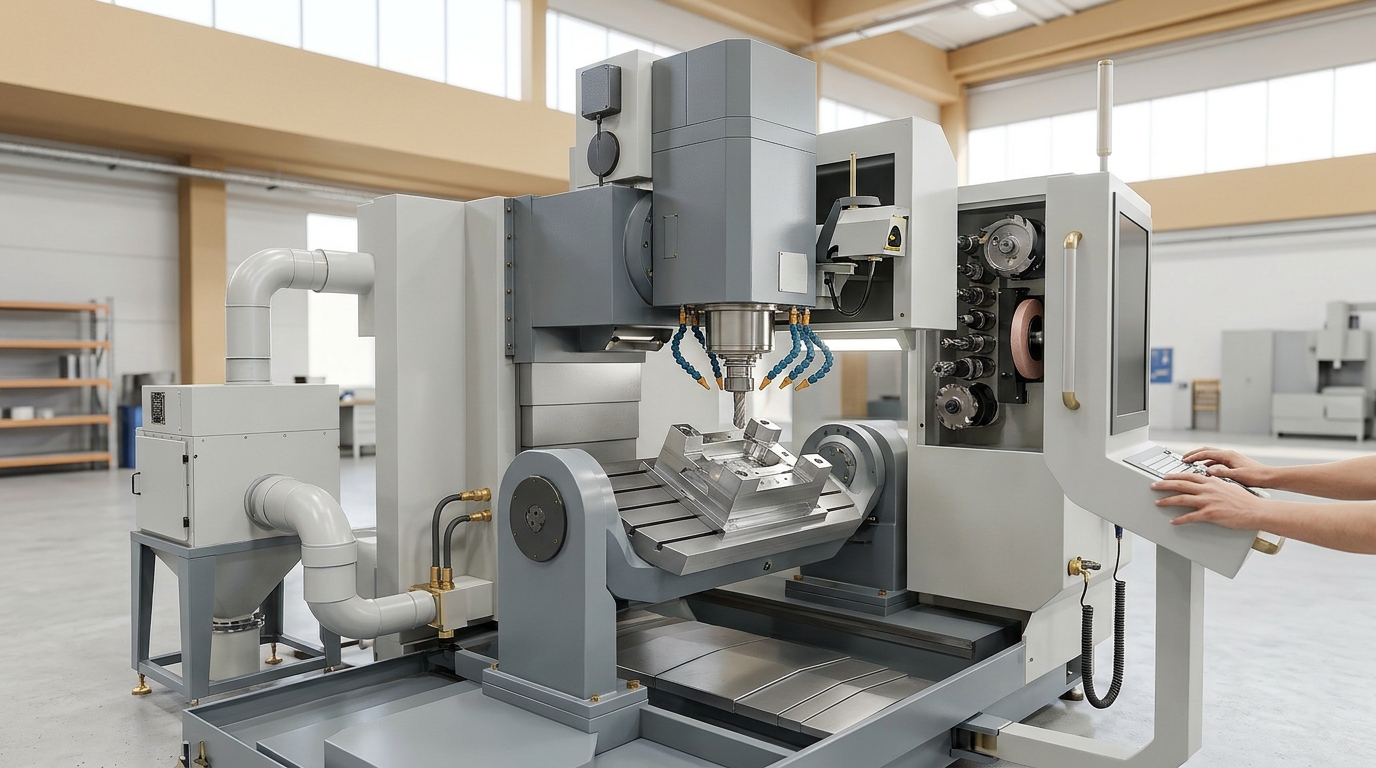
Growth has also involved dedicated finishing resources. Penn United now runs an AM postprocessing cell with a United Machining wire EDM for part cutoff, a Chevalier surface grinder and a Hurco three-axis machining center. The article also notes the use of mini tensile bars as a lower-cost approach to material characterization, with ASTM standards now available. Together, these assets point to a production-oriented approach focused on repeatability and on establishing a control plan for each qualified part.
In terms of end markets, roughly 50% of the additive business is tied to energy, spanning oil and gas, nuclear and renewables. Another 30% or more is linked to defense, currently focused largely on material characterization work. Other applications mentioned include a medical device, consumer firearm components, aerospace parts and prototyping. The company also reports growing interest in thermal management components, which it connects to data center power demand and emerging aerospace opportunities.
A key theme in the case is disciplined application selection. Penn United compares additive with other routes including billet machining, castings and forgings, and pushes parts toward LPBF only when geometry, size, material and finishing needs support the economics. Its employee ownership structure, in place since 1974, is presented as a factor behind both investment discipline and internal commitment. In this example, additive appears to work not as an isolated technology bet, but as a practical extension of a vertically integrated manufacturing business.