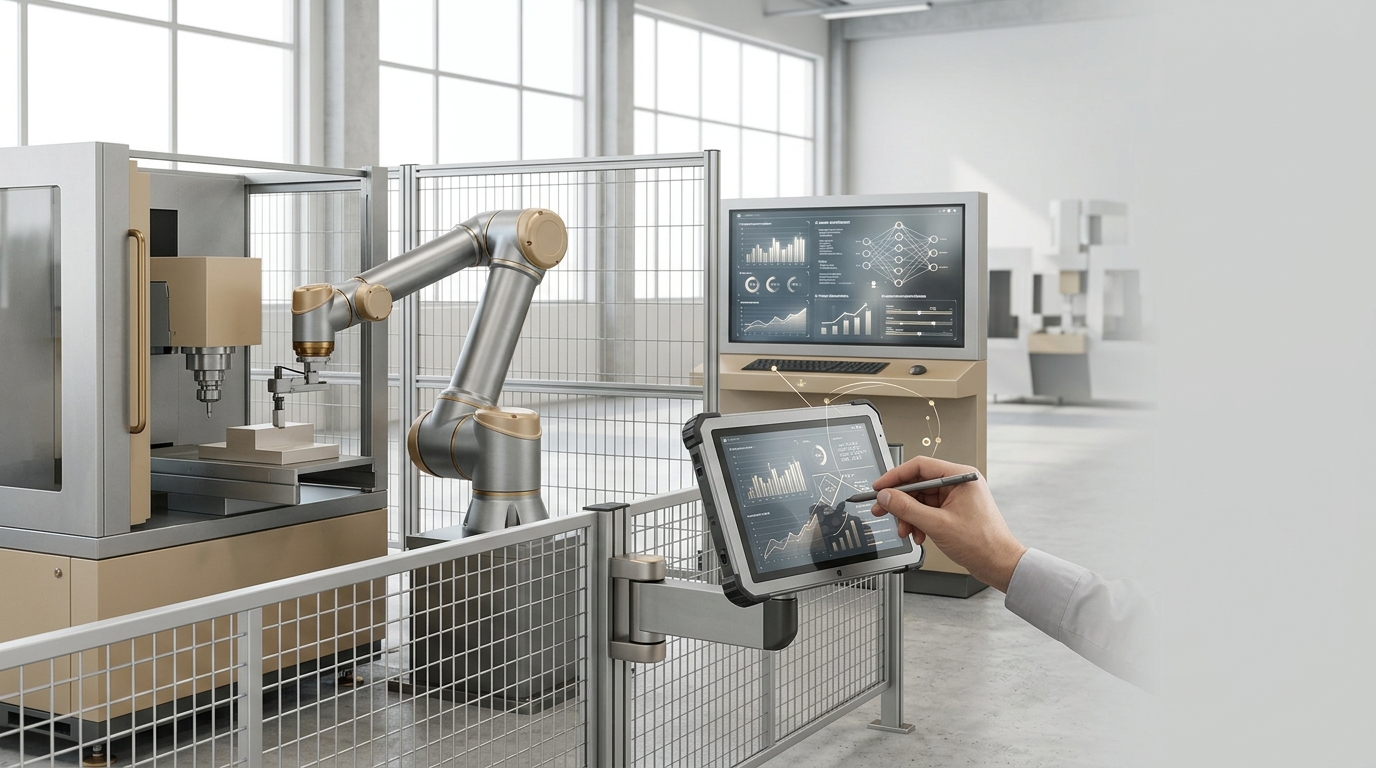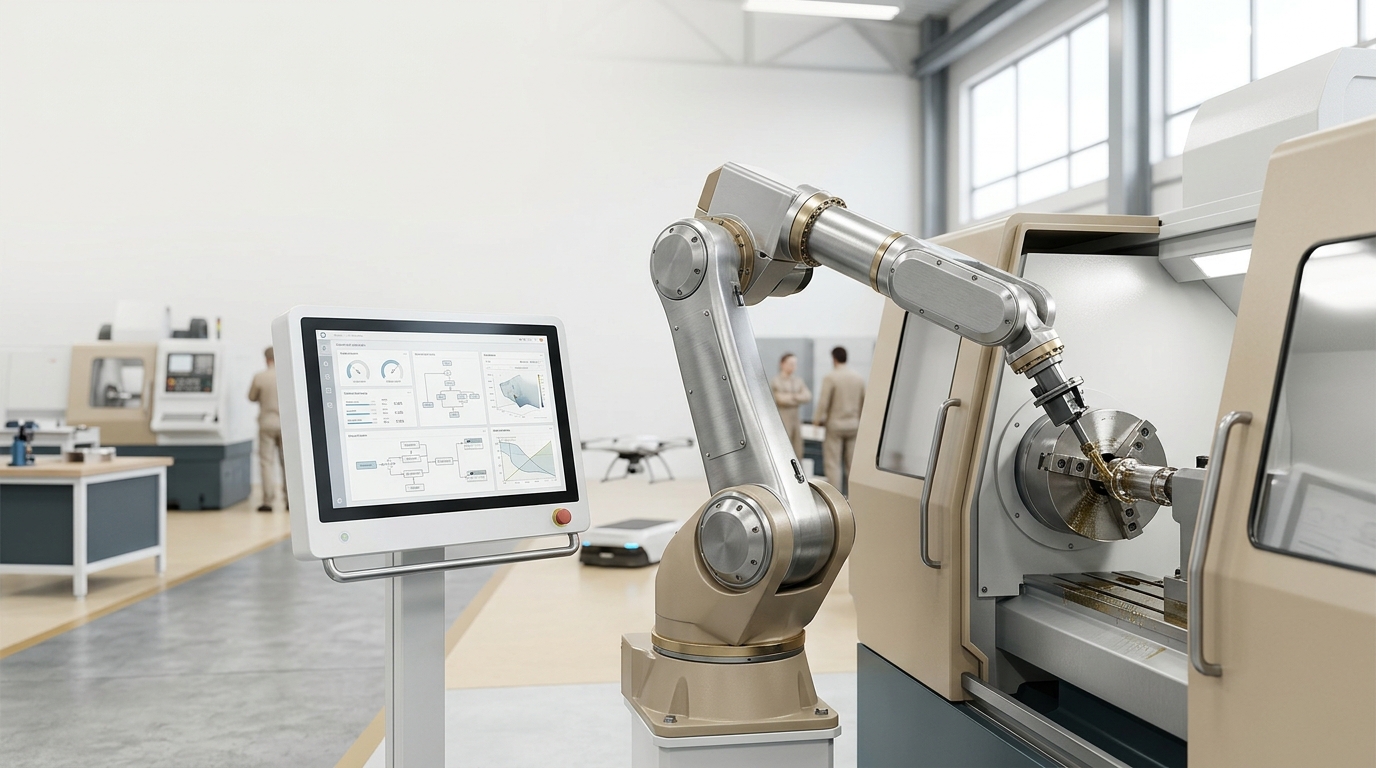
Mazak and Oak Ridge National Laboratory have partnered on a convergent metal additive manufacturing platform intended to combine metal AM and precision machining in production-oriented workflows. The technology was displayed in the Emerging Technology Center at IMTS 2026 and is presented as a way to support both high-mix, low-volume work with shorter lead times and a low-mix, high-volume production strategy.
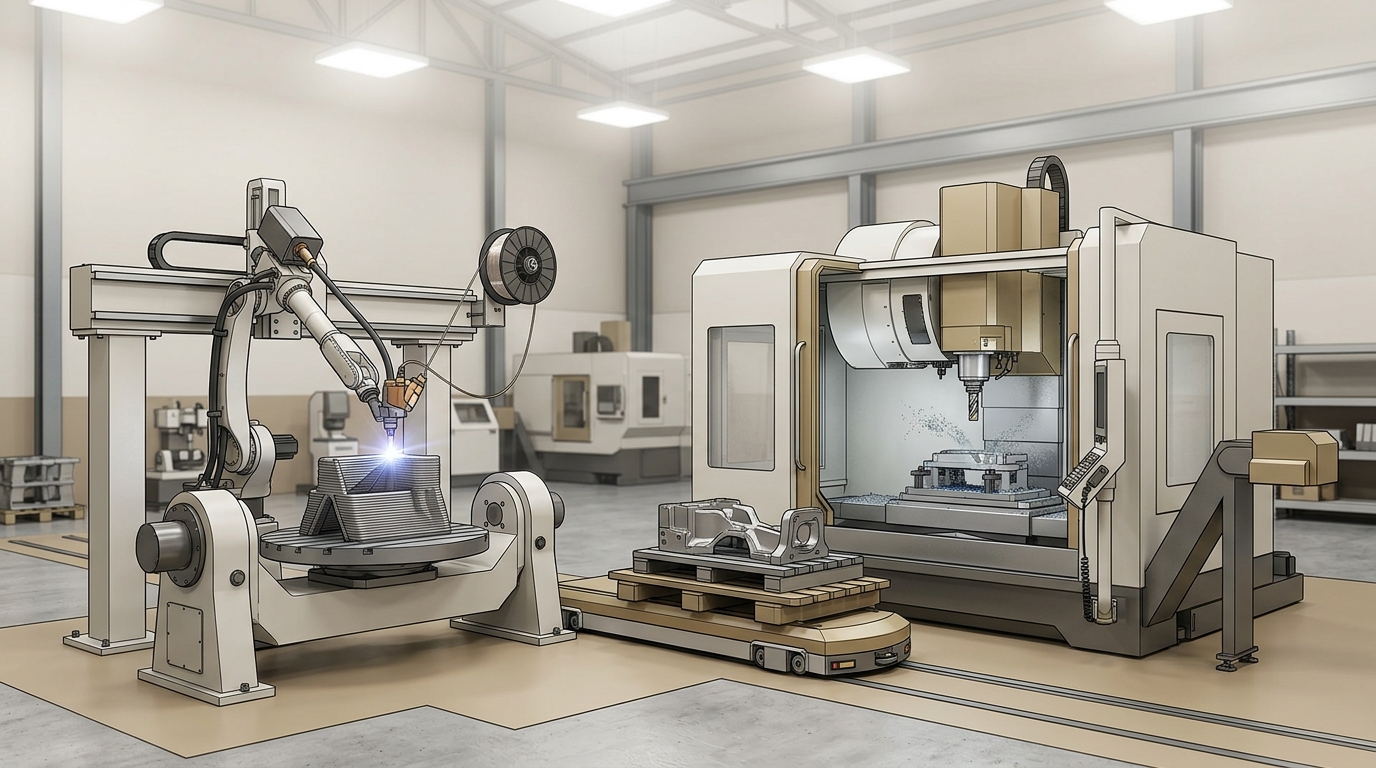
The system on display featured two Mazak VC-Ez 20X vertical machining centers. Its core architecture combines a Mazak VC Ez-20X five-axis machining center with a Fronius International Wire Arc Additive Manufacturing system inside a single automated manufacturing framework. The concept is to connect additive buildup and subtractive finishing more directly, rather than treating them as separate process islands.
In this configuration, the Fronius WAAM system uses electric arcs and standard welding wire to deposit metal layer by layer. The source material describes the process as suited to efficient, large-scale metal 3D printing and says it offers advantages in speed, cost-effectiveness and design freedom compared with traditional manufacturing and powder-based 3D printing. Those performance characterizations are reported by the source and not independently verified here.
After additive buildup, parts move to a standard full five-axis VC-Ez 20X milling machine for finish machining. A Mazak automated palletized transfer system carries common pallets between each stage so the workpiece can remain in repeatable fixturing while moving through the process chain. In practical terms, the platform is designed to handle both additive and subtractive operations within one coordinated cell.
Dan Janka, president of Mazak Corp., said the system reflects Mazak’s long-standing relationship with Oak Ridge National Laboratory in machining research and in advancing hybrid additive manufacturing technology. The application range cited for the platform extends from structural repair to rapid tool production and near-net-shape parts.
For the industry, the IMTS demonstration highlights continuing interest in cells where AM and CNC are integrated rather than simply co-located. For shops making complex parts or variable batches, the potential benefit is the ability to build material quickly with WAAM and then bring the part to final geometry and accuracy with five-axis machining.