Rennscot Manufacturing, based in Woburn, Massachusetts, is repositioning itself from a CNC-centered shop toward a larger role in serial metal additive manufacturing. The company was built on machining, and that business still accounts for the majority of its work today, but management sees additive as the main growth path ahead. According to Additive Manufacturing Media, the current mix is roughly 80% subtractive and 20% additive, with plans to move toward the opposite balance over time.
The company is not presenting itself as a destination for one-off design exploration or difficult custom AM development. Its stated approach is to focus on applications that have already been developed and qualified, where production can be repeated reliably in a manufacturing setting. In practice, that means acting as a contract manufacturer for LPBF parts and for the finish machining that follows, whether the printed components come from Rennscot’s own machines or from outside suppliers.
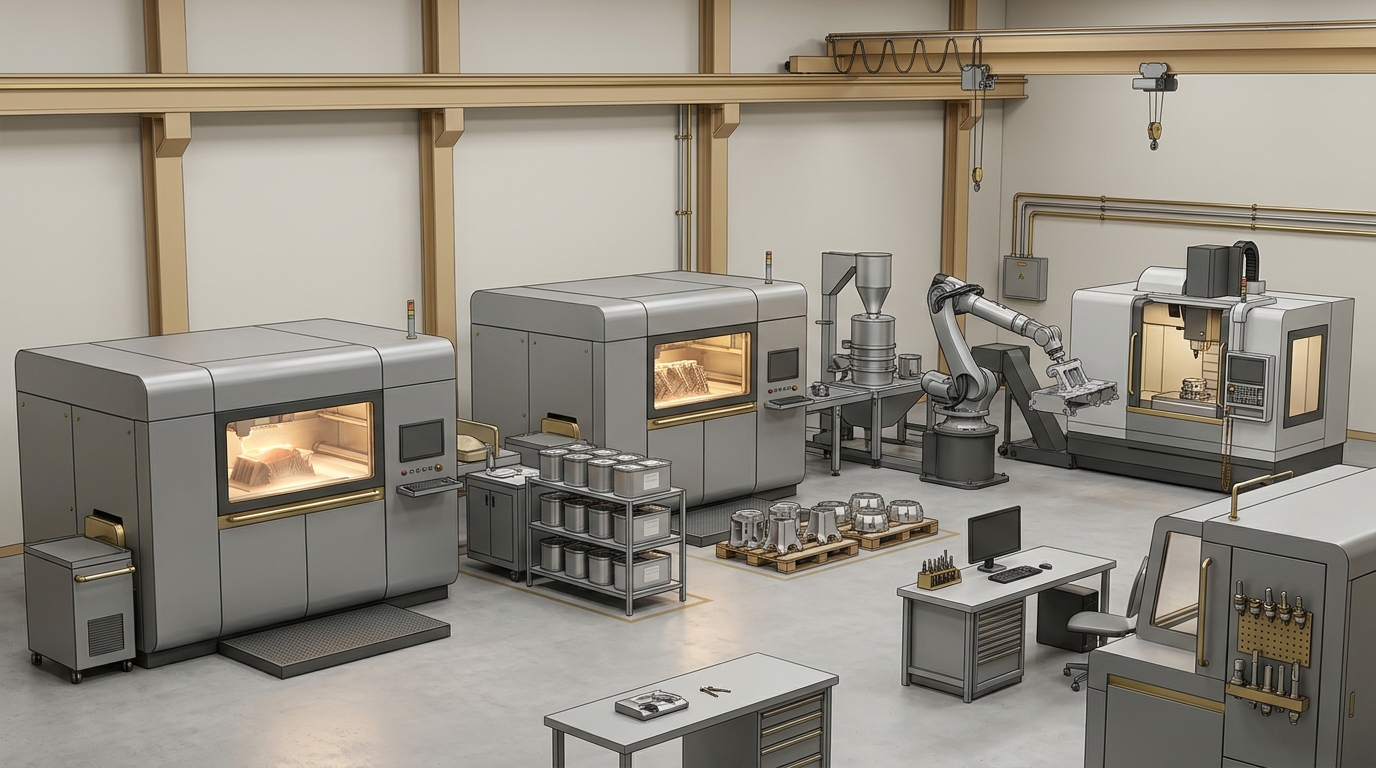
Rennscot currently operates four EOS laser powder bed fusion systems: three M300 machines and one M400. The dedicated additive area was designed with expansion in mind and can accommodate 12 or more systems, with electrical drops already installed. The company prints aluminum, stainless steel, titanium and Inconel, mainly for customers in commercial space, semiconductors and defense, including the U.S. Navy. Staying with one machine platform also reflects market requirements, since some target customers specify EOS equipment, and in some cases the M400 model, in their qualification frameworks.
Standardization is a core part of the scale-up plan. Rennscot limits its material offering, avoids mixing powder lots and says it uses off-the-shelf EOS print parameters for about 90% of jobs. The aim is to reduce process variability while simplifying traceability and repeatability. That discipline carries over to machining as well, where the company’s experience with workholding and finishing complex printed geometries remains an important differentiator in the postprocessing stage.
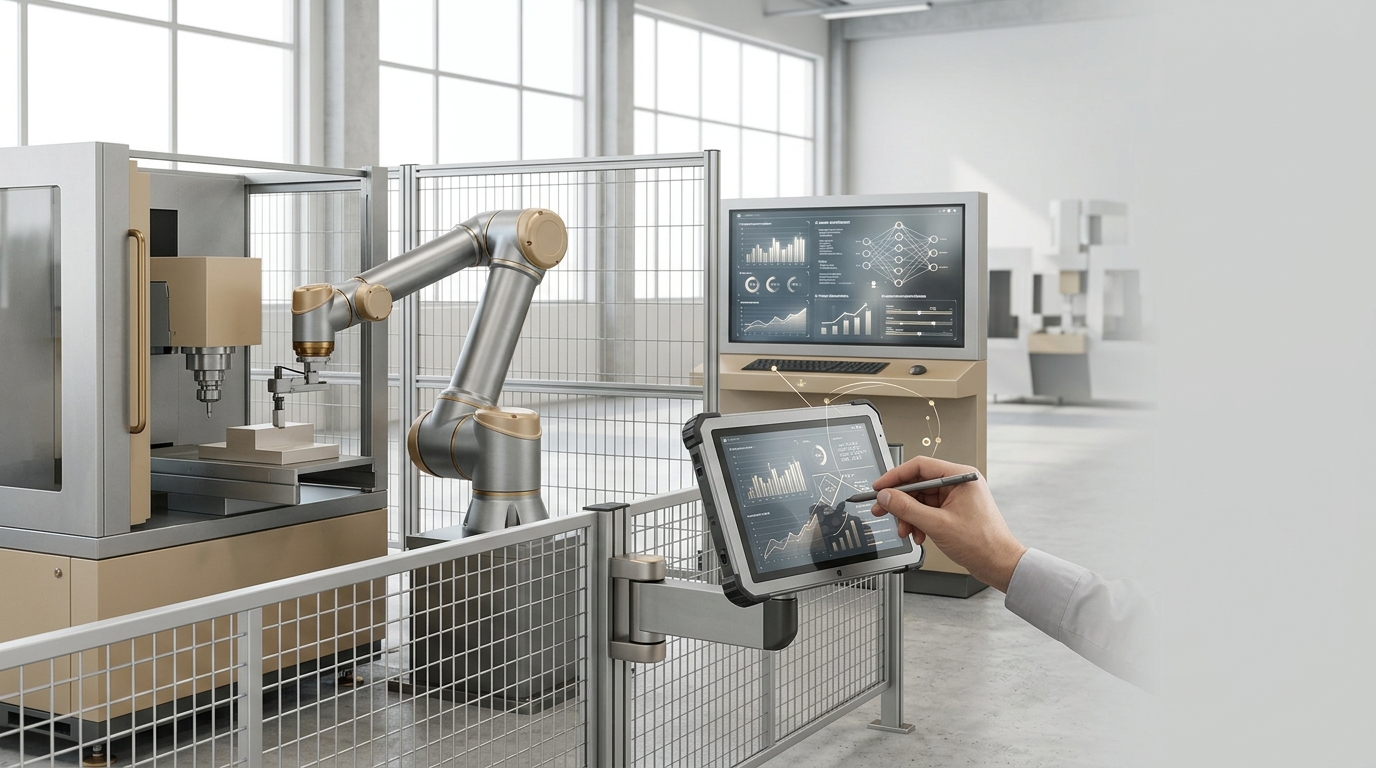
Automation is another pillar of the strategy. Across the shop, machining centers already use pallet changers and other unattended-production accessories. During the reported visit, a Universal Robots cobot was being set up to unload a Haas ST-25 lathe, while another cobot was tending a Zeiss CMM. Rennscot also operates a cell with three Grob G350 five-axis machines served by a FANUC robot on a track, and is evaluating whether similar automation can support higher-volume finish machining of additive parts.
The transition also requires organizational growth. Rennscot has reorganized its engineers into three teams and expects headcount to rise from about 36 employees to 60 or 70 in the next few years. Management identifies hiring, especially engineering recruitment in the Boston area, as a major challenge. Overall, the Rennscot case points to a more mature phase of industrial AM: less emphasis on bespoke design work and more focus on qualified platforms, controlled processes and repeatable production at scale.